





What is the best Glass for a Display Case?
You want strong and secure glass for a display case, but what glass type is best? Learn more here.

Whether a counter display, tower, pedestal or wall mounted case, a display case is a brilliant way to showcase important items – from trophies at a sports club to expensive necklaces at a jeweller. Using the correct glass to protect what’s stored inside your display case is crucial.
Why use tempered glass for a display case?
Usually, the intention of a display case is to keep the items inside safe from being touched, easily stolen or broken. For this reason, you want to use glass that will be fit for purpose and withstand a certain level of wear and tear.
At Stevenage Glass, we make the vast majority of client display cases from tempered or ‘toughened’ glass. This is because tempered glass offers:
- Strength and durability
- Safety features
- Clear display
- Good customer interaction
- Better sales
- Easy cleaning
Tempered glass is favoured over ‘normal’ glass and acrylic. In some situations, tempered glass is required by law for safety e.g., in a leisure centre or school.
Benefits of tempered glass
Tempered glass is made to withstand much higher impact than typical glass. This makes it ideal for display cases as the glass can be poked and prodded, and items rested on top. With toughened glass, there is much less chance of smashes and cracks occurring from day-to-day usage.
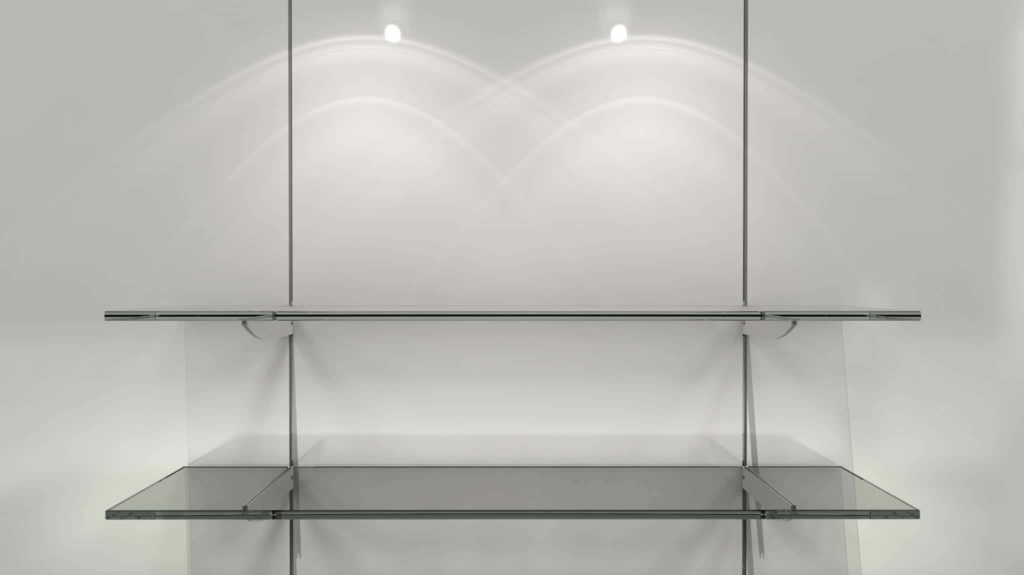
Tempered glass is made by heating and cooling, tempering it to a hardened and strengthened state. It also realigns the molecules so that if the glass breaks it does so into small multi-sided pieces rather than long, jagged shards. Thanks to this altered composition, it is a type of safety glass as it’s much less likely to cut and harm people who are nearby when a break occurs. Though tempered glass would still make a mess if broken, the clean-up would be much quicker and safer than typical glass, with the big pieces easily swept away.
Acrylic vs tempered glass for display cases
Another popular choice for display cases is acrylic, which is a type of dense plastic. Acrylic is light-weight, blocks UV light and can be made as clear as glass when it’s new. However, it is the most flammable of synthetic materials which may not suit the health and safety requirements of your display case location.
Additionally, there are many cleaning products that are not suitable for acrylic, making it susceptible from damage much quicker than tempered glass. In a relatively short time frame, an acrylic display case would start to ‘cloud’ after being routinely cleaned. (It is important to note that no matter the material you use for your display case, care when cleaning is always advised to keep it in the best condition).
Finally, tempered glass is stronger and more durable. Acrylic is more flexible and therefore unable to withstand heavier objects being rested on top of a display case, or on shelves within the case. Whilst acrylic may be cheaper, you ultimately get what you pay for if you choose this material over tempered glass.
Choosing the best glass for your display case
Designing your display case takes time and care to ensure the materials, size and shape are most suitable for the intended use.
Stevenage Glass has established a strong reputation as the leading glass supplier in Stevenage, St Albans and the surrounding areas, able to help you with a wide range of glass products – from display cases to bespoke glass projects.
At Stevenage Glass, our experts help you with the whole production process, making sure everything is to your specification and taste, and at a competitive price point. We’re also here to advise on aftercare once your display case has been delivered, so you’re never more than a phone call away should you need our assistance.
Get in touch to discuss your display case today.