





Local Delivery Options Available

Quick Turnaround

Quality Bespoke Glass Products
Top Causes of Misted-Up Double Glazing Units


Double glazing is comprised of two panes of glass which are separated by a gap typically filled with Argon gas. This energy efficient design helps to improve thermal insulation, sound-proofing and safety, making it a popular choice for properties throughout the UK.
That said, even double glazing can become misted up as condensation forms on the interior and exterior surfaces of the glass, as well as in-between the glass panes, which indicates a problem with the sealing; this could mean you are paying more money on your energy bills to keep your property warm, yet getting nothing back in return!
Where can condensation be found?
Select from the images below

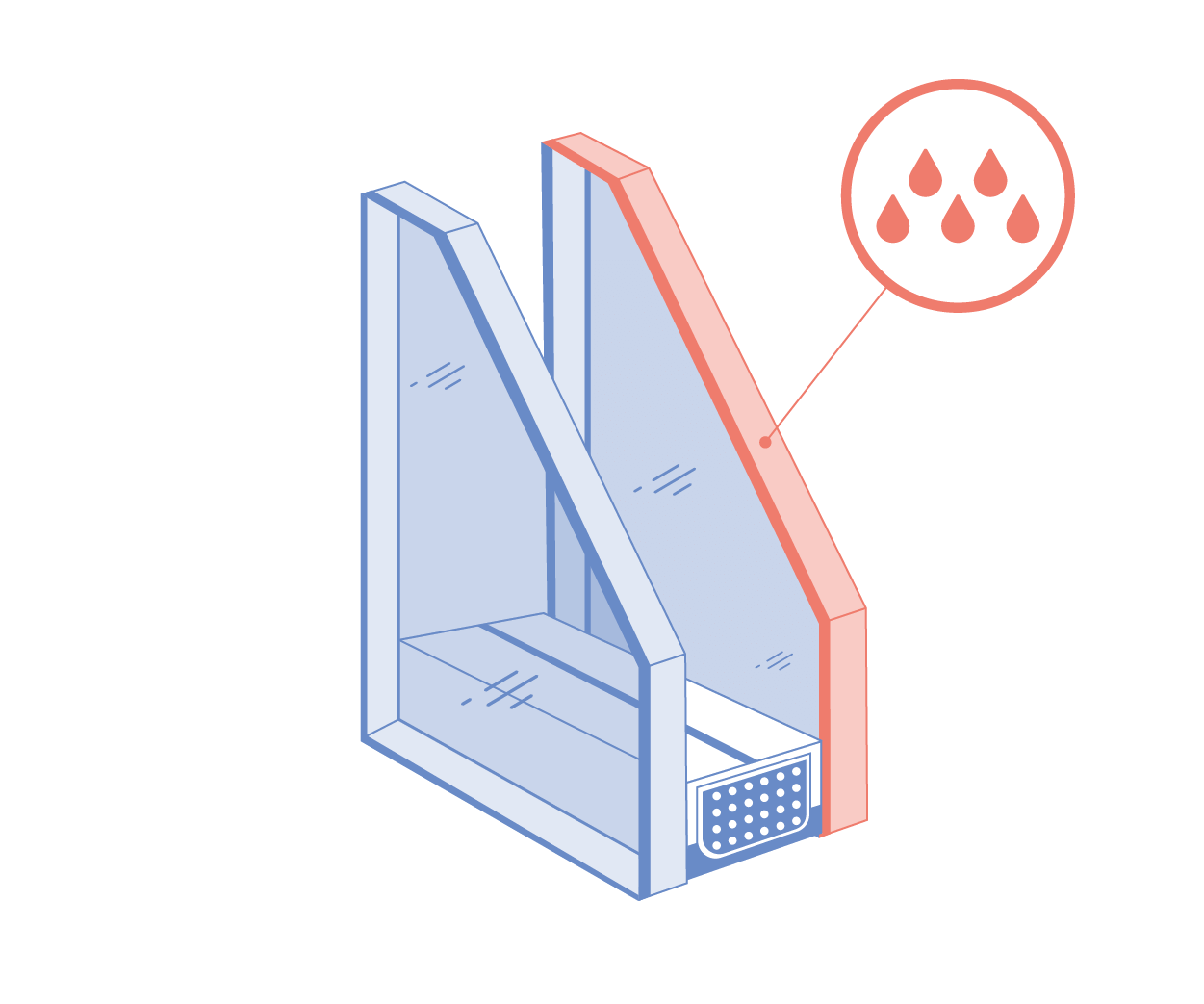

Outside surface of the glass

Where can condensation be found?
Condensation can be found on the exterior surface of the glass. This can also occur on single glazed glass.
What are the causes of condensation on the outside of windows?
The main cause is the surface temperature of the window being cooler than the air inside the room.
Droplets and mist start to form on the outside surface of the glass.
What happens if this is left untreated?
External condensation is a clear sign that your energy efficient double glazed windows are doing their job. They’re keeping as much heat as possible inside the home, and as such, nothing drastic will happen if left untreated – the surface simply needs to be wiped clean.
What are the options available to fix the problem?
There are no specific solutions to fix the problem other than wiping the surface regularly. If you currently have single glazed windows, it’s best to upgrade to double glazing to help regulate moisture levels.
How can the problem be prevented in the future?
The outside temperature cannot be regulated, so be patient and the sun will warm up your windows so the condensation can evaporate.
Doesn’t solve your problem? Read about condensation on the interior of the glass, or in-between the panes to see if that solves your problem.
Inside surface of the glass

Where can condensation be found?
Condensation can be found on the interior surface of the glass. This can also occur on single glazed glass.
What are the causes of condensation on the inside of windows?
Warm air inside the house condenses on cold windows.
Droplets and mist start to form on the inside surface of the glass.
What happens if this is left untreated?
If left untreated, the condensation on the window can drop onto the surrounding wall area – this can cause black mould or, more seriously, wet rot or dry rot.
What are the options available to fix the problem?
Ventilation is key to fix the problem. Other problems such as black mould or wet/dry rot will most likely need specialist help.
How can the problem be prevented in the future?
Minimise the amount of moisture inside the property through suitable ventilation: use a dehumidifier, install extractor fans, open windows, hang washing to dry outside where possible.
Doesn’t solve your problem? Read about condensation on the exterior of the glass, or in-between the panes to see if that solves your problem.
In-between the glass panes

Where can condensation be found?
If condensation is forming in-between the panes of glass, then you have a ‘failed unit’ or ‘blown unit’ as your windows are no longer sealed and there are most likely holes in the seal. This would not occur on single glazed glass.
What are the causes of condensation in-between the window panes?
Broken or faulty seals are a common cause of moisture collecting between double glazed panes – if the seal between the two panes fails or breaks, condensation can get into the double-glazed unit and cause a misted-up window. Over time, any harsh solvents, oil-based products or even washing-up liquid could break down the sealant of the window and allow water to seep through.
The seal can break due to either age or a poor installation. In the latter case, it is likely that holes will appear within just 12 months. At the point of installation, the units should be placed on blocks that keep them elevated above any draining water, giving any water a way to escape and drain away. However, if the water is not draining away, this is when it poses the problem of penetrating the glazing unit. Double glazing needs a solid structure that is reinforced and stable. If it isn’t reinforced properly, the unit will be flexible and could swerve and bend during extreme weathers, such as high winds and storms, which could be very dangerous.
What happens if this is left untreated?
Small holes in the seals will draw moisture from the atmosphere, which then collects on the inside of the window. When temperatures change, this moisture can cause condensation to build up and cloud the inside of the window pane. With nowhere for it to escape to, it can result in a collection of water on the inside of your window.
What are the options available to fix the problem?
Inspect round the edge of the window by running your finger along the sealant to check for any gaps – if there are any breakages in the sealant, then it will need to be replaced. Likewise, if the windows are dated, then replacing the whole unit is usually recommended to avoid the same problem from happening again.
How can the problem be prevented in the future?
Make sure you seek expertise from a trusted and experienced double glazing company who have a good reputation for quality products and installations.
Doesn’t solve your problem? Read about condensation on the interior or exterior of the glass to see if that could be your issue.
Stevenage Glass – Repairing and replacing
If your windows are misting up and showing the common signs of failure, then now is the time to call in the specialists. Stevenage Glass offer repairs and replacement on both double glazing and single glazed units to all our customers. Please contact us today for more information: